








Is Red Dye Diesel Safe for Your Modern Truck? What You Need to Know
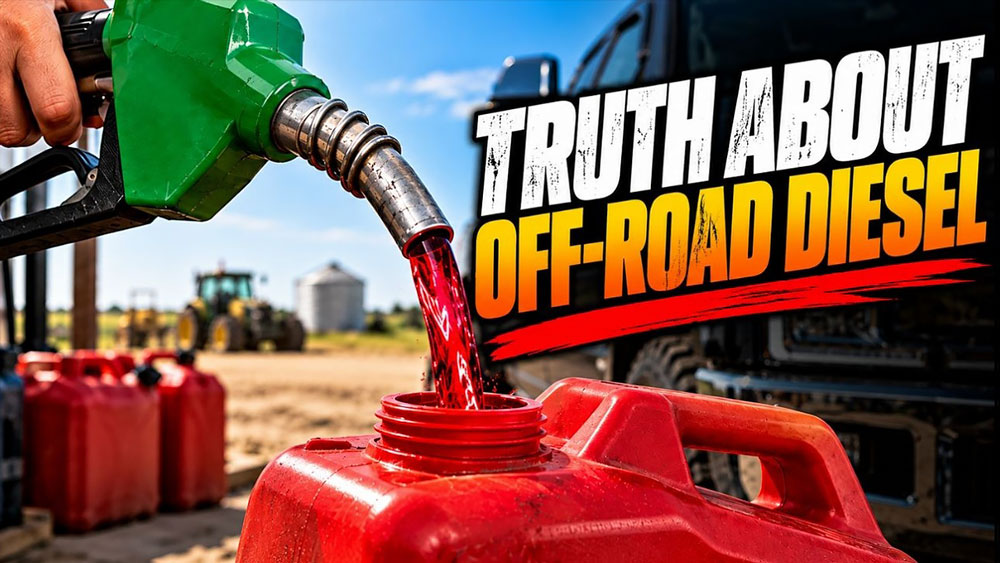
In this episode of The Diesel Podcast, we tackle the off-road fuel question, the reality of ASTM minimum fuel specs, and what modern high-pressure common rail engines actually need to survive long term.
The Verdict on Engine Safety
From a mechanical perspective, yes, red dye diesel is completely safe to run in your truck. Chemically, red-dyed off-road diesel is identical to clear on-road Ultra Low Sulfur Diesel (ULSD). Both meet the same ASTM specifications and will not clog your fuel filters or alter engine performance. The red dye is solely a tax marker indicating fuel exempt from highway road taxes.
Listen here: The Diesel Podcast — Is Red Dye Diesel Safe for Your Truck?
Two Critical Cautions Before You Fill Up
The Dye Stains Everything: The dye chemical is highly concentrated. Even a single fill-up can stain fuel filters, lines, and tank sensors red. Diluting the dye out takes numerous cycles of clear fuel, which creates legal risks once temporary road tax waivers expire and roadside enforcement resumes.
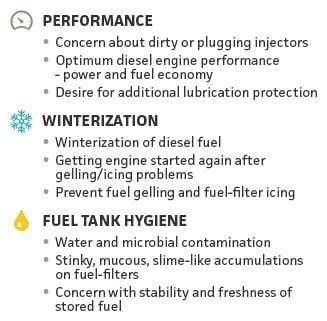
Missing Additive Packages: Like baseline clear diesel, red dye fuel carries no refinery guarantee for proper lubricity or detergency. High-pressure common rail (HPCR) systems require supplemental protection to protect against pump wear and injector fouling.
Proactive Fuel Care: Recommended Protocol
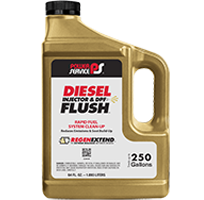
Baseline Reset: Treat with Diesel Injector & DPF Flush to remove stubborn internal diesel injector deposits (IDIDs) and restore optimum fuel spray patterns.
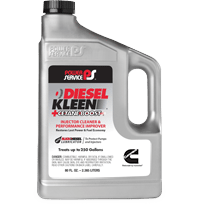
Routine Maintenance: Run Diesel Kleen +Cetane Boost during warmer months to restore up to 6% in fuel efficiency and improve lubricity.
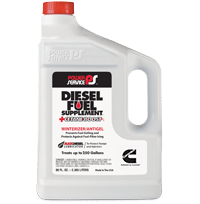
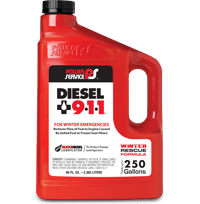
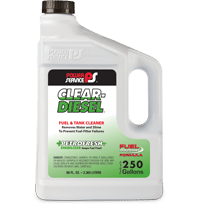
Winter Readiness: Switch to Clear-Diesel Fuel & Tank Cleaner in the fall to remove entrained water, then dose with Diesel Fuel Supplement +Cetane Boost whenever temperatures fall below 32°F. Keep a bottle of Diesel 911 on board exclusively for emergency de-gelling.
Click to view podcast transcript
YouTube · The Diesel Podcast Episode Transcript: “Is Red Dye Diesel Safe for Your Truck? “
• Host: The Diesel Podcast
• Featured Guests: Garth Redifer, (VP of Sales, Power Service Products)
50:01
[00:00] – Introductions & Background
• Host: Welcomes Garth to The Diesel Podcast (presented by DFC Diesel) and outlines the key topics: recent executive orders concerning red diesel, rising fuel prices, and upcoming winterization preparation. Mentions Garth’s background with the show.
• Garth: Explains his career background. Joined Power Service in 2008 as a regional manager in the Pacific Northwest working with distributors and end users. Promoted to Vice President of Sales in 2020, overseeing regional managers across the country to keep pace with industry shifts and customer needs.
[02:16] – Is Red Dye Diesel Safe for Modern Trucks?
• Host: Highlights the temporary executive order allowing off-road red diesel to be used on-road without penalty or highway taxes, noting that truck owners are asking if it alters engine safety.
• Garth: Confirms it is fundamentally the same fuel. Both red dye diesel and standard highway diesel are Ultra Low Sulfur Diesel (ULSD) meeting identical ASTM specifications—one is simply dyed red for tax identification.
• Garth: Explains that red dye fuel does not damage fuel filters or internal parts. However, because refiners do not guarantee additive packages (such as lubricity or detergency) in raw diesel, vehicle owners must actively treat their fuel to maintain peak performance and injector protection.
• Host & Garth: Discuss availability. Red diesel is primarily found in rural agricultural, logging, and construction corridors rather than metro areas.
[05:44] – The Risks: Permanent Staining & Regulation
• Garth: Warns drivers about dye concentration. A single ounce treats a massive volume of diesel, leaving heavy stains on tanks, lines, and fuel filters.
• Garth: Even after waivers expire, traces of red dye can linger across several fill-ups, potentially creating issues during state DOT fuel dips or roadside inspections.
[08:35] – Filtration & Fuel Cleanliness Realities
• Host: Inquires whether the red dye chemical affects filter life or flow.
• Garth: Confirms that dye will not cause premature filter plugging. Filter plugging is almost always caused by external tank contaminants—water, microbial growth, and sediment—rather than the dye itself.
[10:06] – Maximizing Fuel Mileage Amid High Fuel Costs
• Host & Garth: Discuss the strain of surging diesel prices (approaching $8/gallon in parts of the Pacific Northwest), leaving commercial operators operating on tight margins.
• Garth: Explains how fuel additives cut operating costs. Power Service testing shows that treating with Diesel Kleen +Cetane Boost delivers a realistic 2% to 6% improvement in fuel economy by cleaning injectors, improving atomization, and raising cetane levels.
[14:02] – Deep Cleaning with Diesel Injector & DPF Flush
• Garth: Explains the protocol for neglected or high-mileage engines. Starting with Diesel Injector & DPF Flush removes stubborn deposits and internal diesel injector deposits (IDIDs) immediately—providing an instant boost in fuel efficiency.
• Garth: Recommends maintaining that clean baseline by switching to regular treatments of Diesel Kleen +Cetane Boost during warmer weather to keep fuel properly atomized instead of streaming raw fuel into the combustion chamber.
[19:27] – Lab Testing vs. Real-World Fuel Quality
• Garth: Contrasts OEM engine testing environments with real-world pumping stations. Engine manufacturers test in dyno cells using clean, freshly refined, perfectly blended fuel drums.
• Garth: In the real world, fuel travels through pipelines, terminals, and transport trucks into underground station tanks that collect water and microbial contamination. When delivery trucks drop a load, these heavy bottom sediments churn into suspension, entering the consumer’s tank.
[27:46] – The 3-Step Winter Fuel Strategy
• Step 1: Dehydrate Tanks Before the Freeze
o Freezing issues around 30°F to 32°F are often ice formation from entrained water, not fuel gelling. Use Clear-Diesel Fuel & Tank Cleaner in the fall to disperse moisture before sub-freezing weather arrives.
• Step 2: Prevent Gelling with Antigel Additives
o When ambient temperatures fall below 32°F, dose fuel with Diesel Fuel Supplement +Cetane Boost. This prevents paraffin wax crystals from agglomerating and plugging filter pores.
o Important tip: Always run the engine after dosing so treated fuel circulates through the fuel lines and filters before parking overnight.
• Step 3: Keep Emergency Rescue on Hand
o Use Diesel 911 strictly as an emergency reliquefier if fuel gels and the truck stalls. Dose the fuel filter and tank to dissolve wax, warm up the system, and then follow up with Diesel Fuel Supplement +Cetane Boost.
[34:54] – Product Compatibility & Fuel Heaters
• Garth: Confirms all Power Service chemistries are fully compatible and can be safely blended (e.g., topping off Diesel Kleen +Cetane Boost with Diesel Fuel Supplement +Cetane Boost as cold snaps approach).
• Garth: Notes that OEM fuel filter heaters only operate while the engine is running; they do not protect tanks, lines, or cold filters sitting idle overnight.
[39:53] – Extreme Cold Climates (#1 Diesel vs. #2 Diesel)
• Garth: Reviews cold-climate fuel formulations in regions like Alaska and Canada. Extreme conditions rely on #1 Diesel (kerosene blend) with very low cloud points (-70°F), but #1 Diesel is drier and has lower BTU energy. Operators use Diesel Kleen +Cetane Boost to restore critical lubricity and power.
• Garth: Reminds drivers that standard “winter diesel” from a refinery only has a reduced cloud point; it does not guarantee an added antigel additive package.
[45:15] – SEMA Build Updates & Wrap-Up
• Garth & Host: Discuss custom shop builds heading to SEMA, including a 12-valve Cummins-swapped classic Ford truck.
• Garth: Directs listeners to powerservice.com and social channels for fuel economy calculators, cold-weather guidelines, and testing reports.