








Red-Dyed Diesel for On-Road Use: Rules, Residual Risks, and Protecting Your Fuel System
By Jessica Crabtree
Director of Technical Services,
Power Service Products
October 6, 2026
Recent federal executive action and state emergency declarations have raised questions from diesel owners and fleet operators about running red-dyed off-road diesel on public highways.
While headlines often describe this as an immediate tax holiday, the operational and regulatory reality involves legal limits, tax deferral fine print, long-lasting dye markers, and potential fuel system risks.
1. What the Waivers Actually Say About Taxes and Road Use
The federal executive action provides temporary administrative relief, but it does not represent an automatic permanent repeal of fuel taxes:
• Taxes are deferred, not erased: Only Congress can permanently repeal the 24.4-cent federal highway excise tax. The federal order directs the Treasury to defer payment of excise taxes without interest or penalties through December 31, while tasking the administration with finding avenues to permanently cancel that obligation. Legally, the liability is deferred rather than eliminated outright.
• State taxes remain independent: Federal action does not wipe out state road fuel taxes. While federal authorities encourage states to match the waiver, state-level rules vary widely. Crossing into a state that has not suspended enforcement leaves operators vulnerable to state tax evasion penalties.
• Retail pumps are not converted: Highway truck stops and gas stations are not draining underground tanks to dispense red fuel. Access remains confined to bulk farm tanks, construction skids, and commercial cardlocks.
2. Solvent Red 164 Lingers in Fuel Systems
Even during an active waiver period, the physical dye package could introduce long-term compliance issues.
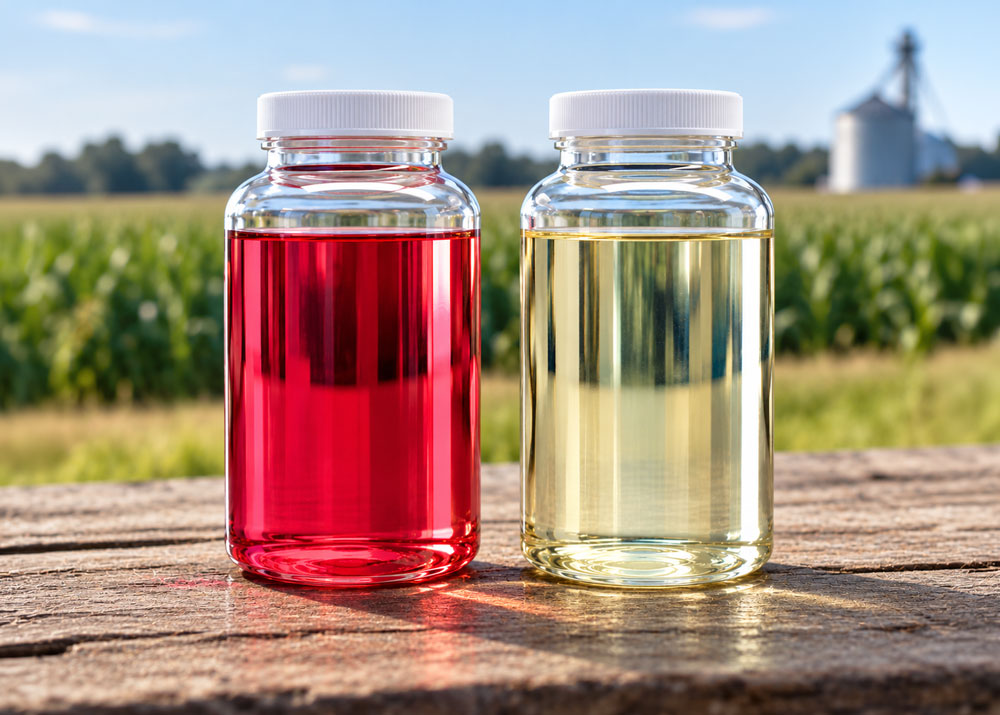
Off-road diesel contains Solvent Red 164, an oil-soluble chemical marker detectable at microscopic levels:
• Stained filter media: The dye permanently stains filter media. A filter cartridge can show a distinct pink or red hue weeks after switching back to clear on-road fuel.
• Discolored components: Water separator bowls, sight glasses, and clear return lines absorb the dye and can retain color.
• Washout lag: It generally takes 4 to 6 complete fills of clear Ultra Low Sulfur Diesel (ULSD) to flush visible color from tanks, fuel rails, and lines.
If a DOT or state inspector checks your fuel system after temporary orders expire, residual dye triggers an automatic inspection. Maintain detailed invoices, delivery tickets, and waiver documentation in the vehicle.
3. Bulk Tank Storage and Contamination Hazards
Base red diesel is the same #2 distillate as clear ULSD; the operational problem lies in how bulk fuel is stored. High-volume retail stations turn over inventory every few days, but off-road tanks on farms or job sites sometimes sit for months:
• Water accumulation: Aboveground tanks vent directly to ambient air. Day-to-night temperature changes cause moisture to condense on internal walls and settle at the tank bottom. Drawing from an unmaintained bulk tank pulls free water directly into the truck.
• Microbial growth: Bacteria and fungi thrive at the water-diesel boundary layer, producing sludge that plugs fuel filters and corrodes injection components.
• Unblended seasonal base stock: Bulk tanks filled in late summer hold base fuel with no cold-flow improvers. Running unblended summer off-road fuel as fall and winter temperatures drop causes rapid wax dropout and filter gelling.
4. Protecting High-Pressure Common-Rail (HPCR) Systems
Modern HPCR systems operate at 30,000 to 40,000 psi with clearances measured in microns. Basic fuel system maintenance remains crucial regardless of fuel color:
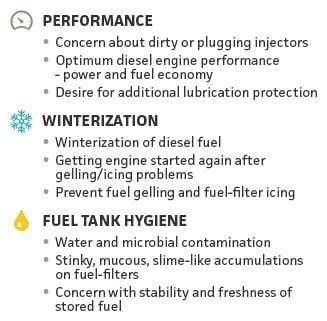
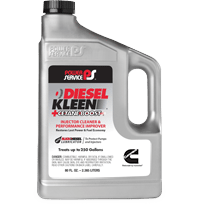
• Maintain lubricity: Hydrotreating strips natural lubricating properties from all modern ULSD base stocks, and off-road bulk fuel is no exception. To shield high-pressure pumps and injector needles from friction and scuffing, treat bulk fuel with Diesel Kleen +Cetane Boost. Its Slickdiesel Lubricator provides advanced lubrication that exceeds baseline fuel specifications to keep precision fuel systems protected.
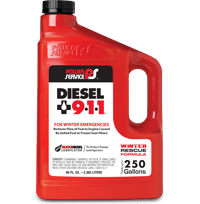
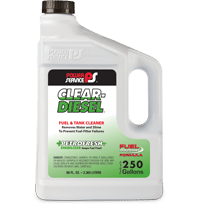
• Keep water out: Water hitting extreme combustion heat inside the injector nozzle causes metal erosion at the spray tip. That damages the spray pattern, leading to rough idling, lost power, and potential injector failure. Always drain water separators regularly. For tanks with seasonal condensation or signs of water hazing, run Clear-Diesel Fuel & Tank Cleaner to safely disperse moisture and clean the fuel circuit.
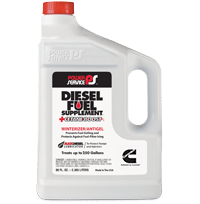
• Treat for freezing temperatures: Any bulk fuel put into service during colder months requires a proven antigel treatment to prevent paraffin wax crystals from plugging fuel filters. Use an antigel like Diesel Fuel Supplement +Cetane Boost to modify paraffin wax crystals and lower the Cold Filter Plugging Point (CFPP).
Pre-Checklist for Using Bulk Fuel Under a Waiver
1. Verify state-level alignment: Confirm whether the specific states where you operate have formally matched the federal enforcement waiver.
2. Retain paper trails: File all purchase invoices, gallon amounts, dates, and supplier delivery tickets for at least 12 months in case of deferred tax audits.
3. Test the bulk tank: Use water-finding paste to check the bottom of stationary tanks before drawing fuel.
4. Treat every fill: Add Diesel Kleen for lubricity and injector detergent chemistry with every fill, and switch to Diesel Fuel Supplement as fall and winter weather approaches.
ABOUT THE AUTHOR
Jessica Crabtree, BS Chemistry (ACS Certified)
Jessica is the Director of Technical Services at Power Service Products, bringing over 12 years of specialized experience in fuel system performance and maintenance. Analyzing over 2,000 fuel samples annually, she provides data-driven insights into real-world fuel quality, fuel stability, and equipment longevity. An active member of ASTM Committee D02, she leverages her technical expertise to help fleets and drivers optimize fuel efficiency and ensure operational reliability in all seasonal conditions.