








Why Antigels Don’t Melt Ice: The Hidden Water Problem in Winter Diesel
By Jessica Crabtree
Director of Technical Services,
Power Service Products
October 6, 2026
When diesel engines die on the side of the road during the first cold snap, most drivers assume their fuel gelled. They pour in a bottle of antigel, crank the starter, and still lose power and stall.
When you pull the fuel filter, the real problem is obvious. It isn’t waxy fuel plugging the media, it’s solid ice.
The issue wasn’t fuel gelling; it was freezing water. Antigels are formulated to modify paraffin wax crystals, not melt ice. If you have water in your tank, an antigel cannot fix it.
Two Different Cold-Weather Problems
Winter diesel shutdowns trace back to two separate physical reactions:
1. Wax Gelling: Diesel fuel naturally contains dissolved paraffin wax. When fuel temperatures reach the cloud point, wax begins precipitating out of solution. As temperatures drop further to the Cold Filter Plugging Point (CFPP), these crystals agglomerate and wax plugs filter pleats and starves fuel flow.
2. Filter Icing: Water is heavier than diesel and settles to the bottom of the fuel tank. When that free or entrained water gets pulled through tight, modern 2-micron filter media in sub-freezing air, it freezes solid at 32°F (0°C).
Treating for wax does not solve a water problem. If water is sitting in your tank when freezing temperatures hit, that filter will ice over, drop your rail pressure, and shut down the engine.
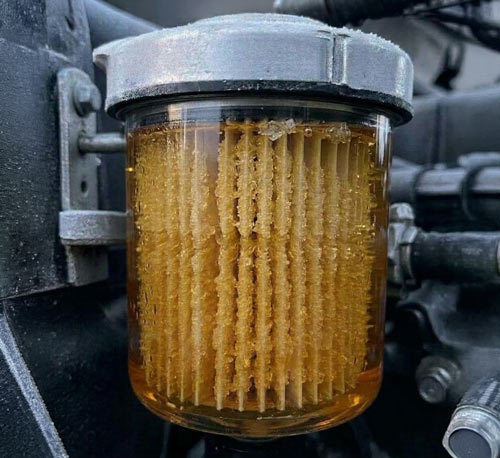
A diesel fuel filter obstructed by ice. Because water freezes at a higher temperature than the point at which diesel fuel begins to gel, any water present in the fuel will rapidly form ice on the media pleats, leading to premature filter plugging and failure before fuel gelling occurs.
Where the Water Comes From
Water gets into your fuel system through normal, everyday operating conditions:
• Daily Condensation Cycles: As temperatures swing between warm days and cold nights, air inside a half-empty tank expands and contracts. Moisture from the air condenses against the cool inside walls of the tank and pools at the bottom.
• Biodiesel Blends: Modern Ultra Low Sulfur Diesel (ULSD) and common biodiesel blends (B5 to B20) hold far more moisture than older fuels. Biodiesel is hygroscopic, pulling water out of the air and holding it in suspension. As temperatures drop overnight, that absorbed water drops out of solution and falls to the bottom of the tank.
• Terminal and Rack Turbulence: When a transport tanker dumps a fresh load of fuel at a truck stop or yard, it churns up settled condensation, sediment, and bottom sludge. If you fill up shortly after, that suspended water and debris goes directly into your saddle tanks.
The 3-Step Approach to Winter Reliability
Winter operability failures trace back to two completely different physical reactions: freezing water and crystallizing paraffin wax. Treating one won’t solve the other.
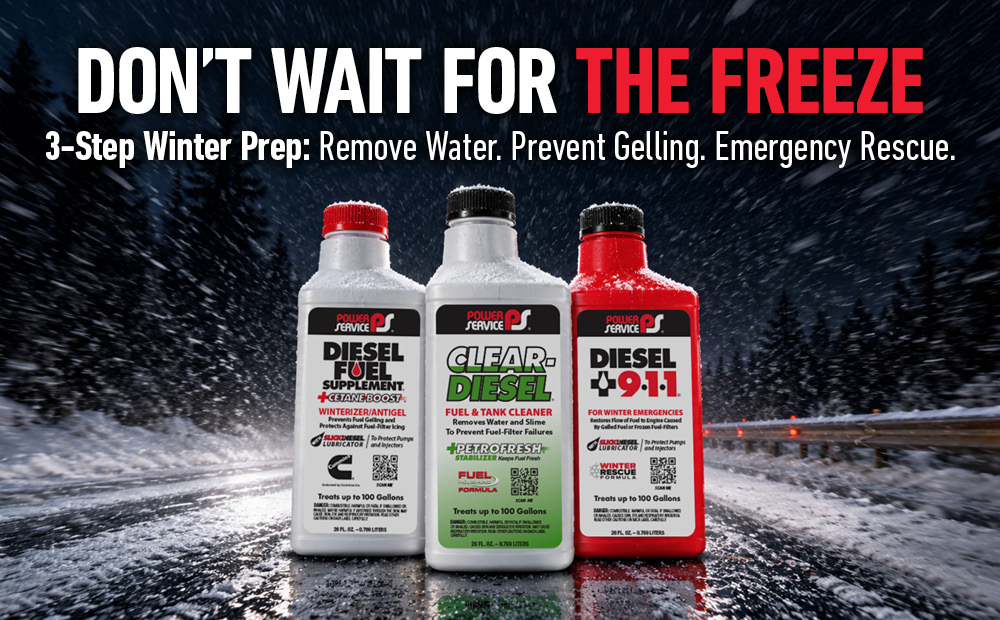
Power Service developed the 3-Step Winter Prep protocol to address both issues systematically before equipment gets stranded:
| Step | Action | The Threat It Solves | Recommended Product |
|---|---|---|---|
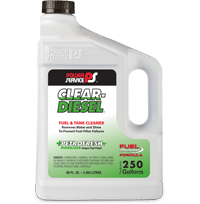
| Step 1 | Remove Water: Dehydrate the Fuel System | Free water, entrained moisture, tank rust, microbial slime, iced filters | Clear-Diesel Fuel & Tank Cleaner |
| Step 2 | Defend: Prevent Gelling | Paraffin wax fallout, high Cold-Filter Plugging Points (CFPP), rough cold starts | Diesel Fuel Supplement +Cetane Boost |
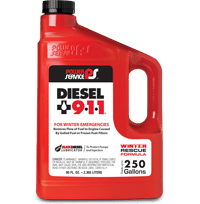
| Step 3 | Rescue: Reliquefy Gelled Fuel & De-Ice Filters | Gelled wax, roadside freeze-ups, frozen filter elements | Diesel 911 |
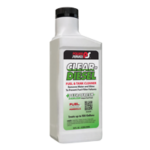
Step 1: Remove Water — Dehydrate the Fuel System
Draining the fuel-water separator bowl only removes free water sitting directly over the drain plug; it will not touch the water floating through the rest of the fuel.
Run Clear-Diesel Fuel & Tank Cleaner in the fall before freezing weather arrives. Clear-Diesel uses an advanced dispersant to break surface tension and dissolve suspended moisture so it cannot pool at the bottom or freeze across the filter. It also cleans soft deposits off tank walls and stabilizes stored fuel.
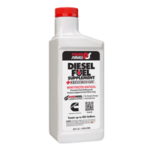
Step 2: Defend — Prevent Gelling
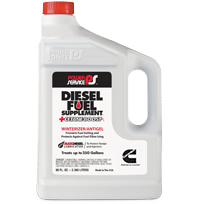
Once ambient temperatures drop toward freezing, treat with Diesel Fuel Supplement +Cetane Boost (the white bottle) at every fill-up. It prevents fuel gelling down to -40°F, lowers the Cold Filter Plugging Point (CFPP), and boosts cetane for faster cold starts. It is also endorsed by Cummins.
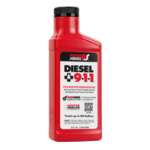
Step 3: Rescue — Reliquefy Gelled Fuel & De-Ice Filters
Keep a bottle of Diesel 911 on-hand for emergencies. If an unexpected cold front catches you with untreated fuel, Diesel 911 reliquefies gelled fuel and de-ices frozen filters to get you moving again. It is an emergency tool, not a daily preventive treatment.
Learn More About Winter Diesel Prep
From managing operational logistics to keeping critical machinery dependable when winter weather moves in, get the complete breakdown directly from Jessica Crabtree.
Read the White Paper: Download Why Antigels Don’t Melt Ice: The Science of Pre-Winter Diesel Tank Prep (PDF) to see the full technical breakdown on 2-micron filter icing mechanics and cold-flow operability.
ABOUT THE AUTHOR
Jessica Crabtree, BS Chemistry (ACS Certified)
Jessica is the Director of Technical Services at Power Service Products, bringing over 12 years of specialized experience in fuel system performance and maintenance. Analyzing over 2,000 fuel samples annually, she provides data-driven insights into real-world fuel quality, fuel stability, and equipment longevity. An active member of ASTM Committee D02, she leverages her technical expertise to help fleets and drivers optimize fuel efficiency and ensure operational reliability in all seasonal conditions.