








Is Your Diesel Fleet Drinking Bad Fuel? We Are on The Heavy Duty Parts Report Podcast
The Silent Threat Eating Your Fuel Economy (And How to Stop It)
Listen to Episode 377 on The Heavy Duty Parts Report
to hear the full field results and discover how active fuel management lowers your fleet’s total cost of operation.
Ever feel like your trucks are burning through fuel faster than they should, or spending way too much time in the shop for premature filter changes and constant DPF regenerations?
The problem might not be driver habits or engine wear — it’s the fuel in the tank.
In Episode 377 of The Heavy Duty Parts Report, host Jamie Irvine sat down with Jessica Crabtree (Director of Technical Services) and Garth Redifer (Vice President of Sales) from Power Service Products to unpack why modern diesel fuel quality is one of the most overlooked drivers of high fleet maintenance costs.
Why Today’s Diesel Isn’t What It Used to Be
Modern diesel fuel has evolved significantly over the past decade:
• Less Natural Lubrication: The desulfurization process strips diesel of the natural compounds that protect pumps and injectors.
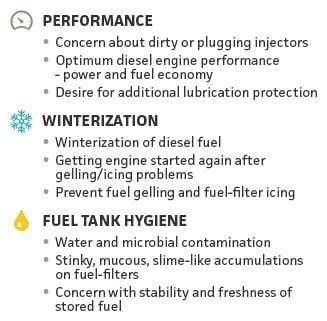
• Higher Sensitivity in HPCR Engines: Today’s high-pressure common rail engines operate under extreme tolerances and pressures. Even minor deposits on injector tips disrupt the fine fuel mist needed for clean combustion.
• Storage Instability & Moisture: Modern ULSD sheds water rapidly. If fuel sits in bulk tanks or equipment tanks, condensation accumulates, inviting microbial growth (“diesel algae”) and accelerating filter clogging.
Key Takeaway: Why Bad Fuel Hurts Modern Diesels
Quick Answer: Modern Ultra-Low Sulfur Diesel (ULSD), biodiesel blends, and renewable fuels often lack sufficient native detergency and lubricity. In high-pressure common rail (HPCR) systems, low-quality fuel creates internal injector deposits, causing poor spray atomization, incomplete combustion, frequent DPF regens, and dropped MPG. Proactive fuel treatment restores atomization, stops water-related filter plugging, and shields high-pressure pumps from premature failure.
The pump won’t clean it for you. Protecting your equipment takes a few simple, proactive steps:
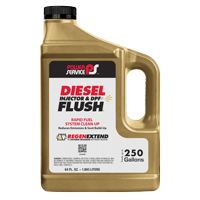
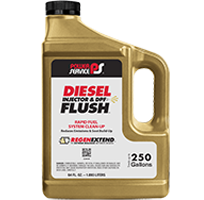
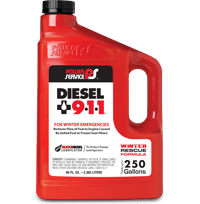
Clean the injectors: A quality fuel detergent cleans out sticky deposits so fuel burns completely, keeping your engine running smooth and efficient. For a deep system reset that restores spray patterns and cuts down regen cycles, reach for Diesel Injector & DPF Flush®.
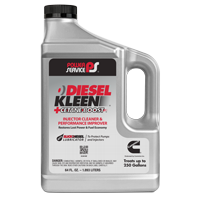
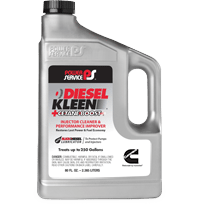
Add lubrication: High-pressure pumps need extra protection to stop friction and avoid expensive replacements. Regularly treating your fuel with Diesel Kleen® with the proprietary Slickdiesel® Lubricant delivers the vital lubricity modern pumps need to stay protected and run smoothly.
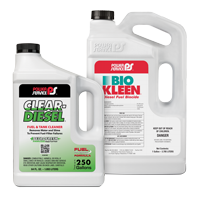
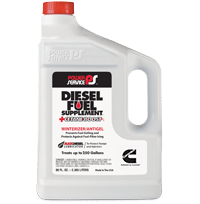
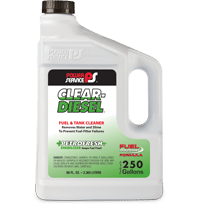
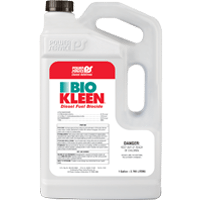
Keep tanks dry: Dispersing water stops rust and cuts off bacteria before it can turn your fuel tanks into a headache. Use Clear-Diesel® Fuel & Tank Cleaner to disperse moisture and stabilize stored fuel. If microbes have already taken hold, knock them out with Bio Kleen® Diesel Fuel Biocide.
Quick Fleet Fact:
In a recent field test on daily delivery trucks, cleaning dirty injectors bumped fuel economy straight from 5.7 to 6.9 MPG while cutting exhaust filter regens by 40%. Cleaner fuel means more miles, less downtime, and real money saved.
Case Study: Measuring Fuel Economy in a Heavy-Duty Diesel Vehicle
Real-World Results: Proven Fleet Impact
In a real-world field study discussed in the episode, daily delivery trucks with fouled injectors received a single deep-clean treatment. The results:
| Fleet Metric | Before Treatment | After Treatment | Operational Gain |
|---|---|---|---|
| Fuel Economy | 5.7 MPG | 6.9 MPG | +21% improvement |
| DPF Regens | Baseline | Reduced by 40% | Fewer active cycles |
| Shop Downtime | High filter & regen swaps | Normalized intervals | Lower cost per mile |
Frequently Asked Questions (FAQ)
What are the early signs of bad diesel fuel in a fleet?
Early signs include declining fuel economy (MPG), frequent or unexpected DPF regens, sluggish throttle response, rough idling, and premature fuel filter clogging before scheduled service intervals.
Why does bad fuel cause more DPF regens?
When fuel injectors develop internal deposits, they spray larger fuel droplets rather than an ultrafine mist. This leads to incomplete combustion, producing excess soot that rapidly loads the diesel particulate filter (DPF) and triggers frequent, fuel-wasting regen cycles.
Can fuel additives fix clogged fuel filters?
If filters are plugging due to water condensation and microbial sludge in fuel storage, using a tank cleaner like Clear-Diesel® and a biocide like Bio Kleen® will eliminate the root contamination. However, once a filter is physically packed with dead biomass or asphaltenes, the filter must be replaced after treating the source tank.
Listen to the Full Discussion
Stop guessing and stop overpaying for filter swaps and fuel.
Listen to Episode 377 on The Heavy Duty Parts Report
to hear the full field results and discover how active fuel management lowers your fleet’s total cost of operation.