








How to Reduce DPF Regeneration Frequency
By Jessica Crabtree
Director of Technical Services,
Power Service Products
If you run a commercial fleet or drive a modern diesel vehicle, managing Diesel Particulate Filter (DPF) regeneration is critical to your bottom line. Every active “regen” cycle burns extra fuel, increases downtime, and accelerates equipment wear.
The Quick Answer: Can a Fuel Additive Reduce DPF Regens?
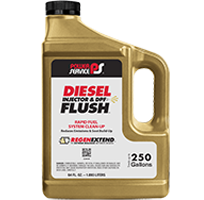
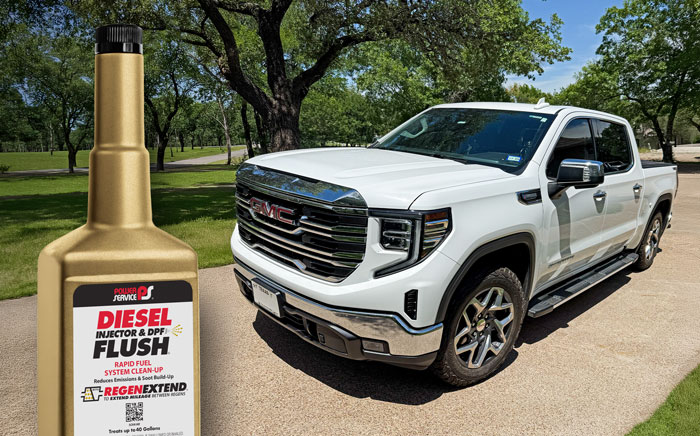
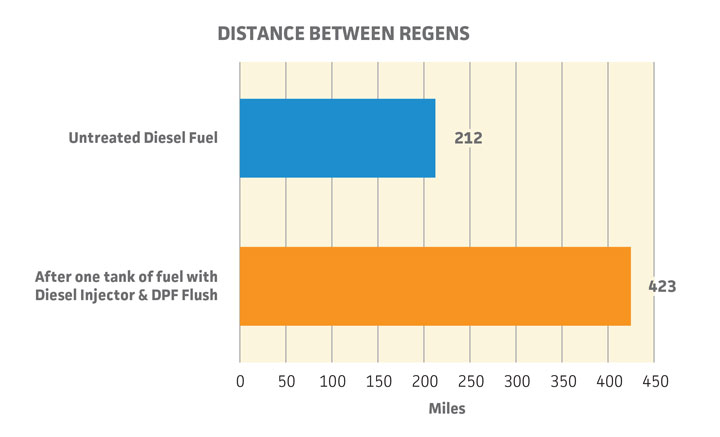
Yes. Real-world testing shows that treating diesel fuel with Power Service Diesel Injector & DPF Flush at a 1:500 ratio can increase the miles driven between DPF regenerations by 99.5%. By restoring fuel spray patterns and lowering soot production, the additive effectively cuts regen frequency in half.
A recent real-world field study evaluated how a single treatment of Power Service Diesel Injector & DPF Flush affects DPF regeneration frequency. The results show a dramatic improvement in operational efficiency.
Study Overview & Methodology
To determine the additive’s effectiveness under strenuous real-world conditions, researchers tracked a commercial fleet vehicle over thousands of miles of long-haul travel across six states (Texas, Oklahoma, Arkansas, Louisiana, New Mexico, and Colorado).
• Test Vehicle: 2023 GMC 1500 Duramax Diesel
• Monitoring Equipment: Banks iDash data logging devices (tracking soot load and regeneration triggers)
• The Baseline: 5 natural regeneration cycles monitored using untreated Ultra-Low Sulfur Diesel (ULSD).
• The Treatment: A single, near-empty fuel tank was treated with Power Service Diesel Injector & DPF Flush at a 1:500 mixing ratio.
• Post-Treatment Monitoring: 5 subsequent regeneration cycles were recorded following the treatment.
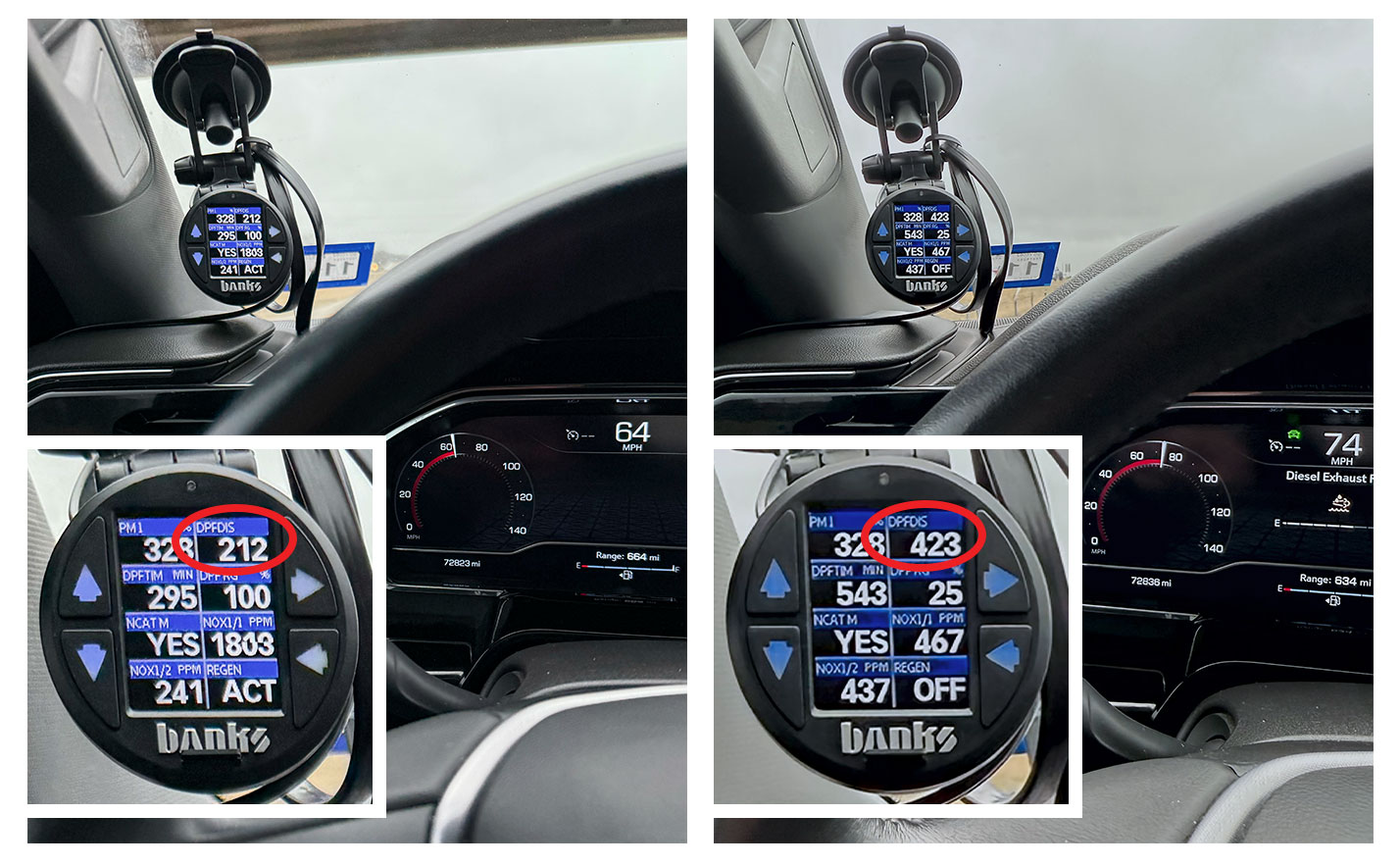
The Results: 99.5% More Miles Between Regens
Data collected by the Banks iDash devices revealed a massive shift in how the vehicle handled soot accumulation after introducing the flush:
| Metric | Untreated ULSD (Baseline) |
Treated with Power Service |
| Average Miles Between Regens | 212 Miles | 423 Miles (+99.5%) |
| System Cleanliness | Heavy Soot Load | Restored Injectors & Cleaner DPF |
Even though highway-driven vehicles naturally run hotter and utilize passive regeneration (burning off soot at normal running temperatures), the cleaning action of the additive unlocked hidden efficiency by removing existing system contamination.
How It Works: The Science Behind the Savings
Power Service Diesel Injector & DPF Flush uses a concentrated dual-action detergent formula that attacks the two primary causes of frequent DPF cycling:
1. Restores Injector Spray Patterns: The additive cleans dirty fuel injectors, restoring optimal fuel atomization (breaking down fuel into tiny droplets). Complete combustion means the engine inherently produces less raw soot to choke the DPF.
2. Promotes Efficient Passive Regen: REGENEXTEND® technology removes stubborn deposits inside the filter. This allows soot to burn away naturally at standard highway temperatures, safely delaying the need for a fuel-heavy active regeneration event.
Key Benefits for Fleet Managers and Owner-Operators
• Maximize Fuel Economy (MPG): Fewer active, fuel-injected regenerations mean less wasted fuel.
• Minimize Downtime: Reduce the risk of forced shop regens, limp mode, and premature DPF replacement.
• Maintain Peak Engine Performance: Keeping the fuel system clean ensures your diesel engine runs at maximum horsepower and efficiency.
For long-haul logistics or daily driving, keeping your DPF clean is vital to performance. A single application of Power Service Diesel Injector & DPF Flush is a proven, cost-effective tool to keep your diesel out of the shop and on the road.
ABOUT THE AUTHOR
Jessica Crabtree, BS Chemistry (ACS Certified)
Jessica is the Director of Technical Services at Power Service Diesel Additives with 12 years of experience in fuel system performance and maintenance. By analyzing over 2,000 fuel samples annually, she provides unique, data-backed insights into real-world fuel quality and equipment longevity. An active member of ASTM Committee D02, she leverages her deep technical background to help fleet managers optimize fuel efficiency, reduce maintenance costs, and ensure reliability in varying regional fuel conditions.