








Separating Fuel Science from Snake Oil: Jessica Crabtree on FreightWaves’s Brake Check Podcast

By Jessica Crabtree
Director of Technical Services,
Power Service Products
October 8, 2026
1. What Is a Realistic Fuel Economy Claim for Diesel Additives?
A legitimate, scientifically backed diesel fuel additive program delivers up to an 8% to 10% improvement in fuel economy, which translates to a realistic gain of 1 to 2 miles per gallon (MPG) over an un-additized, dirty fuel system. Any aftermarket product advertising 20%, 30%, or 40% across-the-board MPG gains fails the scientific standard of reproducibility.
As Jessica explains [07:31], diesel fuel is inherently variable. Unlike pump gasoline, which has standardized octane grades and federally mandated detergent packages, diesel fuel varies widely depending on:
• The originating crude slate (paraffinic vs. naphthenic bases)
• Refinery processing and hydrotreating severity
• Regional blending mandates (biodiesel and renewable diesel blends)
• Seasonal distribution logistics
Because of this natural variability, a single tank test might show high gains under specific conditions, but sustained claims must be backed by multi-vehicle, multi-state field trials [08:16]. Power Service validates its performance using standardized fleet trials ranging from Class 8 line-haul rigs down to half-ton diesels [08:46].
Chemist’s Rule of Thumb: If an additive promises more than a 10% to 15% sustained fuel economy boost [20:43], ask to see the multi-fleet data. Real-world savings come from clearing out power-robbing deposits and restoring proper combustion efficiency.
2. How Do Injector Deposits Destroy Engine Performance and Fuel Economy?
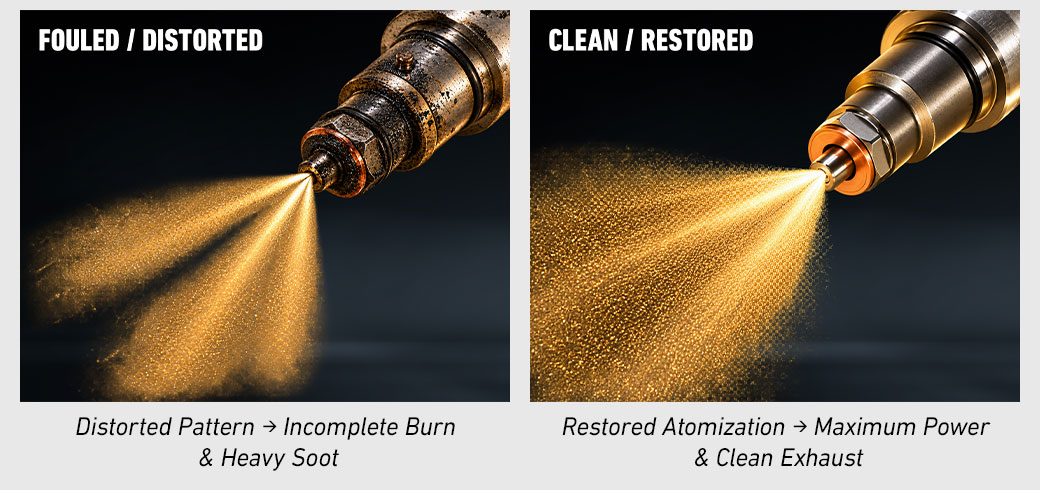
Diesel injector deposits disrupt the fuel spray pattern and prevent fuel from atomizing into a clean, combustible mist. This causes incomplete combustion, a gradual 5% to 6% loss in available horsepower, and climbing fuel consumption. Over time, these microscopic deposits alter the fuel droplet size, preventing diesel from mixing cleanly with compressed air inside the cylinder.
Most drivers only think about an injector when it mechanically sticks open or shut [11:13]. In reality, performance degradation happens long before a mechanical failure:
1. Deposit Formation: Modern high-pressure common rail (HPCR) systems run at pressures exceeding 30,000 psi and temperatures above 300°F. Trace metal ions (such as sodium, copper, or zinc) react with fuel degradation products to create carboxylate soaps, lacquers, varnishes and internal diesel injector deposits (IDIDs). [12:00].
2. Spray Distortion: When these deposits coat the nozzle holes (often smaller than a human hair), the fuel stream turns from a fine, misted cone into an irregular spray [11:37].
3. The Hidden Cost: Operators experience a slow, creeping decline in throttle response and a loss of 5% to 6% of baseline horsepower [12:42]. Because this occurs gradually over thousands of miles, drivers often fail to notice until fuel consumption jumps significantly.
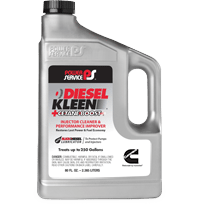
Restoring that spray pattern with a heavy-duty deposit control additive like Diesel Kleen +Cetane Boost restores up to 1 to 2 MPG [13:10]—delivering thousands of dollars in annualized fuel savings for an over-the-road truck.
3. Why Inefficient Combustion Triggers Costly DPF and Regen Problems
Frequent Diesel Particulate Filter (DPF) regenerations are almost always a downstream symptom of incomplete combustion caused by fouled fuel injectors. When fuel fails to atomize properly, unburnt hydrocarbons and heavy soot blow past the exhaust valves straight into the emissions aftertreatment system.
Everything the exhaust stream touches is vulnerable [16:08]:
• Rapid Filter Plugging: Distorted spray patterns produce wet soot that rapidly packs the ceramic honeycomb channels inside the DPF [11:49].
• Shortened Regen Intervals: Instead of regenerating every 800 to 1,000 miles, clogged systems trigger passive and active regens at much shorter intervals [16:32].
• Thermal Stress and Breakdown: Every active regeneration requires late-cycle fuel dosing to elevate exhaust temperatures past 1,000°F. Repeated thermal cycling degrades catalyst coatings, accelerates face plugging and shortens component lifespan.
• Expensive Downtime: If ignored, soot accumulation forces expensive off-vehicle thermal baking or complete DPF replacement [16:46], carrying bills between $4,000 and $9,000.
Using an advanced detergent and deposit control chemistry keeps injectors clean, ensuring complete fuel burn in the cylinder and reducing upstream soot loading by up to 50% [17:16].
4. Cheap Diesel vs. Clean Diesel: What Really Lurks in Storage Tanks?
Because diesel fuel shares common pipeline networks and terminal racks, the quality difference between low-cost fuel stations and major travel centers usually comes down to tank maintenance and fuel turnover, not the brand.
Unlike gasoline, where premium tiers contain dedicated detergent packages, diesel fuel sold across the street is fundamentally the same base stock [14:08]. The primary hazards at low-cost, low-volume fuel stops are:
• Water Ingress: Thermal swings in poorly vented underground tanks cause condensation and free water settling at the tank bottom.
• Microbial Infestation: Fungi and bacteria thrive at the fuel-water interface, generating acidic sludge and biomass that foul fuel filters within miles.
• Particulate Contamination: Tanks with slow inventory turns allow sediment and oxidized asphalthenes to suspend in the delivered fuel.
To protect high-pressure fuel pumps and injectors, fuel at high-volume truck stops that turn their inventory rapidly [14:28]. Regardless of where you fuel, treat every fill with a detergent to protect against inconsistent baseline fuel quality [15:31].
5. Cold Weather Operability: The #1 Mistake Drivers Make with Antigels
The most common and costly cold-weather mistake is adding antigel additive after the fuel has already reached its cloud point or gelled. Antigel additives are crystal modifiers designed to prevent wax agglomeration during crystallization; they cannot dissolve or melt solid paraffin wax crystals once they have formed.
Paraffin wax is a natural, energy-dense component of petroleum diesel [19:20]. How cold-flow chemistry works:
• Natural Wax Formation: As fuel cools, paraffin molecules drop out of solution as flat, interlocking, sheet-like crystals that quickly choke filter pores.
• Surface Area Reduction: Antigel chemistry changes the crystal structure into small, compact, spherical formations [18:18]. This creates space between the crystals, allowing liquid diesel fractions to flow through the 2-to-4-micron fuel filter media without starving the pump [19:35].
• The Golden Rule: Antigel must be introduced while the fuel temperature is still well above its cloud point (ideally when ambient temperatures consistently hover near freezing) [18:39].
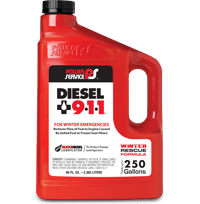
Once fuel has gelled and filters are blocked, standard preventive antigels will not restore flow [18:23]. At that stage, only mechanical thawing or an emergency de-icer like Diesel 911 (designed to liquefy gelled wax and de-ice frozen water) can recover the system.
Power Service Preventive Maintenance Matrix
| Operating Need | Primary Risk | Power Service Solution | Chemist Recommended Timing |
|---|---|---|---|
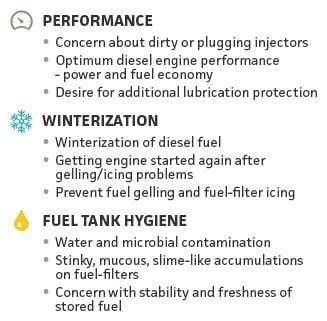
| Year-Round Performance | Injector fouling, power drop, low cetane | Diesel Kleen +Cetane Boost | Every fill-up during non-freezing months |
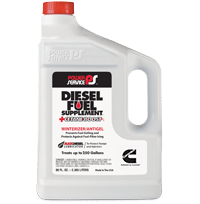
| Winter Antigel Protection | Filter waxing, fuel line freeze-up | Diesel Fuel Supplement +Cetane Boost | Every fill-up once ambient temps approach 32°F |
| Emergency Gelling Recovery | Blocked fuel filters, stranded truck | Diesel 911 | Emergency use only; pour into fuel filter and tank |
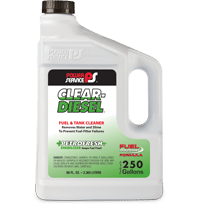
| Moisture and Tank Hygiene | Phase separation, microbial contamination | Clear-Diesel Fuel & Tank Cleaner | Quarterly preventive dosing or seasonal changeovers |
Frequently Asked Questions
What are internal diesel injector deposits (IDIDs)?
Internal diesel injector deposits are microscopic build-ups of metal carboxylate soaps, lacquers, and varnishes that form inside modern high pressure common rail (HPCR) injectors. Unlike traditional external carbon coking on the nozzle tip, IDIDs develop on internal components like the control valve and armature, leading to sluggish needle response, distorted fuel spray, and sudden power loss..
How much fuel economy improvement can I realistically expect from diesel additives?
Field testing across mixed commercial fleets demonstrates realistic, repeatable fuel economy gains of up to 8% to 10%, or roughly 1 to 2 MPG. Claims of 20% to 40% improvements are scientifically unrealistic across broad fuel slates and duty cycles.
Can dirty fuel injectors really cause DPF clogging?
Yes. When injector nozzles accumulate deposits, the spray pattern degrades from a fine mist into larger, uneven fuel droplets. This causes incomplete in-cylinder combustion, producing excess unburnt soot that migrates downstream into the exhaust system, prematurely overloading the DPF and triggering frequent, stressful active regenerations.
When should I start treating my fuel with winter antigel?
Antigel should be added before ambient temperatures reach freezing (32°F / 0°C). Antigel additives are crystal modifiers that prevent wax crystals from locking together as they precipitate; they cannot melt or reverse wax that has already solidified on the filter.
Does cetane number matter in modern diesel engines?
Yes. Cetane measures the ignition delay of diesel fuel. Modern HPCR systems run smoothest and most efficiently on 48 to 50 cetane fuel, whereas standard pump diesel often rates between 40 and 45. Elevating cetane shortens ignition delay, producing faster cold starts, complete fuel burn, quieter engine operation, and reduced exhaust soot.
Click to view podcast transcript
Brake Check Episode Transcript: “Diesel Is $5.65. Don’t Buy a Damn Thing Until You Watch This”
• Show: Brake Check (FreightWaves)
• Featured Guests:
o Jessica Crabtree, Director of Technical Services at Power Service Products
o James Edwards, Founder & CEO of Elite Strategic Services
[00:00] – Introduction
Host: Trucks have big wheels. $5.65 a gallon, and everybody wants a piece of it. The engine burns it, the government taxes it, and every time diesel spikes, somebody magically discovers a bottle, a gadget, a miracle guaranteed to make your truck defy physics.
Fantastic, right? Because when fuel gets expensive, truckers don’t need another sales pitch—they need receipts. Today, we’re going to get a chemist to tell us about what’s actually happening inside that gallon. And a Washington insider is also going to explain who’s getting a piece of that before you ever burn it.
Science versus snake oil, taxes versus roads, and one rule for everybody: bring the proof or bring nothing at all.
This is Brake Check. And today’s chemist is Jessica Crabtree from Power Service Products, joining us to separate real fuel science from expensive snake oil: mile-per-gallon claims, injector deposits, regens, DPFs, and what actually saves you money at the pump.
Then James Edwards of Elite Strategic Services takes us inside Washington: the highway bill, truck parking, autonomous trucks, fuel taxes, and who the hell is going to pay for America’s roads next. Your gallon, your money—two very different places it can disappear. It’s time to go full stop.
[05:16] – Part 1: Diesel Fuel Chemistry & Deposit Science with Jessica Crabtree
Host: My first guest is a chemist, which makes her potentially the most dangerous person in today’s conversation. Jessica Crabtree is the Director of Technical Services at Power Service Products. Her world is diesel fuel, injector deposits, contamination, and all the things that are helping you figure out whether the fuel you just paid for is going to cost you a fortune beyond the pump.
She works in an industry where we have everything from legitimate chemistry to absolute snake oil sitting on the exact same shelf. So today, I’m not giving anyone the benefit of the marketing department. If it works, you’re going to show us; if it doesn’t, well, we’re going to bust the myth. Jessica, welcome to Brake Check. Are you ready to go all MythBusters with us?
Jessica Crabtree: Sure! Glad to be here.
Host: First, how in the world did you get into this? When I hear “chemist,” I think of so many other things people could be doing, and you’re dissecting how people can save money at the pump. How did you choose this path?
Jessica Crabtree: I went to school to get a chemistry degree, so I didn’t exactly have diesel fuel on the mind. But as I started applying for jobs, this was the industry that was most interesting. Now I’ve been doing it for about 12 years, so I feel like I’ve learned quite a bit.
Host: Someone watching right now has bought a bottle promising them 10%, 15%, maybe even 20% or better fuel economy. You’re the chemist. Before I give anybody my money, what does a legitimate fuel economy claim have to prove?
Jessica Crabtree: Claims are really difficult to prove because every batch of diesel fuel behaves a little bit differently. On one tank of fuel, you may see a substantial improvement, but then you get fuel in a different state from a different refinery or a different crude slate, and you get a 3% or 8% improvement. It’s not completely uniform across the board because diesel fuel is so variable. You want to look at field trials and actual published data—not just one study, but across multiple vehicles, multiple states, and different formulations like biodiesel and renewable diesel blends.
Host: Let’s put Power Service in the hot seat. When Power Service makes a fuel economy claim, who tested it, how was it tested, and could somebody independently reproduce those results?
Jessica Crabtree: Absolutely. We do a lot of testing on our own. We run field trials on all different sizes of diesel engines, from Class 8 big rigs all the way down to a half-ton Duramax. They are very reproducible. Our field team has standardized testing templates that they run directly with customers. Anyone tracking their mileage accurately can reproduce those results.
Host: If someone out there wants to test their own trucks, what do they need to measure to ensure an accurate test?
Jessica Crabtree: You track your mileage and the exact volume of fuel you’re adding. Start with a full tank, log your miles, and at every fill-up, measure how many gallons it takes to return to full. That allows you to calculate true MPG on that tank cleanly.
Host: What is a fuel-saving claim you’ve seen on a shelf that made you think, “Oh, come on”? Where does science draw the line?
Jessica Crabtree: We claim up to 10% at Power Service, and that “up to” reflects real fuel variability. But once someone starts claiming 20%, 30%, or 40% improvement across the board, that’s where it becomes unrealistic. You might see an anomaly on a single tank under specific conditions, but promising that consistently is outrageous.
[11:00] – Injector Deposits, Spray Patterns, and DPF Regens
Host: Let’s talk about injector deposits. Walk us through what’s happening inside the engine. What’s building up, and how does that turn into money coming out of an owner’s pocket?
Jessica Crabtree: Most people think an injector issue just means an injector sticking completely open or shut, requiring total replacement. But long before that happens, deposits form on the microscopic holes of the nozzle tip.
That directly disrupts the fuel spray pattern entering the combustion chamber. That spray pattern makes or breaks your fuel economy. If fuel isn’t atomized properly, unburnt fuel heads out through the exhaust and into the particulate filter, clogging it up much faster and triggering frequent regens.
These deposits are frequently caused by trace metal ions in the fuel that react under extreme pressure and heat to form carboxylate soaps, varnishes, and lacquers.
Host: What symptoms should drivers look for before they have a catastrophic failure?
Jessica Crabtree: A gradual loss of fuel economy and power. You can lose 5% to 6% of your engine power so slowly that you barely feel it day to day, but that steady decline points directly to deposit buildup.
Host: Same truck, same duty cycle: dirty fuel system versus a clean, properly maintained fuel system. What is the realistic MPG difference?
Jessica Crabtree: With a quality additive program and good fuel sourcing, seeing a 1 to 2 MPG improvement is realistic. In a heavy-duty truck, a 1 to 2 MPG change saves thousands of dollars over the long haul. Fuel is the single largest fluid expense in your vehicle—far exceeding DEF, oil, or transmission fluid. Keeping the system clean with a deposit control additive pays for itself rapidly.
Host: Can cheap diesel across the street turn out to be expensive in the long run?
Jessica Crabtree: Diesel differs from gasoline. Gasoline has distinct octane grades and mandated additive minimums. Diesel fuel is largely fungible through the pipeline. Saving a few cents across the street isn’t necessarily bad based on brand alone, but you want to buy from high-volume stations that turn over fuel rapidly. Low-volume tanks carry higher risks of water ingress, sediment, and microbial growth.
Host: Connect the dots between the fuel injector and the emissions system. How does dirty combustion become a DPF problem?
Jessica Crabtree: Incomplete combustion leaves unburned fuel that travels straight out into the exhaust. Everything the exhaust touches—sensors, catalytic surfaces, and the diesel particulate filter—gets loaded with soot.
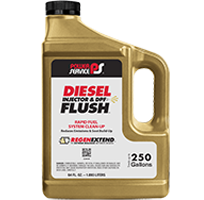
If the miles between your regens start dropping noticeably, that’s a clear sign of poor combustion. Using deposit-control chemistry restores the spray pattern, minimizes unburnt soot upstream, and reduces the frequency of DPF regens. That prevents premature thermal wear on the filter and avoids expensive baking or replacement down the road.
[17:45] – Winter Fuel Gelling & Anti-Gel Science
Host: What is the number one mistake fleets and drivers make when cold weather hits?
Jessica Crabtree: The biggest mistake—and the reason for most of the calls we receive each winter—is waiting until it’s already cold to add an anti-gel.
Anti-gel additives work by modifying the shape and surface area of paraffin wax crystals as they form, preventing them from interlocking and plugging the fuel filter. If the fuel is already cold and those wax crystals have already formed, standard anti-gel cannot break them down. It has to be added before the fuel reaches its cloud point. Once ambient temperatures consistently approach freezing, you need to begin treating your fuel so you don’t get caught off-guard by a sudden cold snap.
Host: A lot of fleet drivers get handed a bottle of additive only after snow is on the ground. Does standard anti-gel do anything at that point?
Jessica Crabtree: If wax crystals have already precipitated and clogged the filter, standard anti-gel cannot dissolve them until temperatures warm up or you use an emergency de-icer. Anti-gels don’t stop wax from existing; they simply alter crystal morphology so liquid fuel can still pass through the filter media.
Host: When an additive makes claims on the shelf, at what percentage should a driver’s BS detector go off?
Jessica Crabtree: For fuel economy, be very skeptical of anything claiming over 10% to 15%. For DPF regen reduction, anything claiming over a 50% consistent reduction is unrealistic across varying real-world fleets and fuel slates.
Host: Where can drivers reach you if they have technical questions?
Jessica Crabtree: You can contact us through the Power Service website or give us a call. I personally answer around 60% of the technical calls and questions that come in.
[21:41] – Mid-Roll Break
(Commercial break featuring OOIDA Truck Insurance.)
[22:16] – Part 2: Capitol Hill, Fuel Taxes & Highway Policy with James Edwards
Host: Up next, we look at why Washington takes 24.4 cents of every gallon before you ever turn the key. James Edwards has worked in Washington public policy since his days on Capitol Hill. He is the founder and CEO of Elite Strategic Services and Conservatives for Property Rights. James, welcome. The truck is easy to understand—explaining Washington is a bit harder.
James Edwards: Washington is like that old saying about making a horse by committee and ending up with an elephant. You have the House, the Senate, external stakeholder groups like OOIDA, ATA, and NASIC, plus the administration. A thousand people shaping legislation is why they say you shouldn’t watch sausage being made if you want to eat it.
Host: Let’s look at the Build America 250 Act. $580 billion over five years, passed out of committee 62 to 2. What does this mean for someone running trucks today?
James Edwards: That’s the House-passed five-year highway authorization package. It is bipartisan and includes provisions that groups like OOIDA and NASIC fought for, including measures addressing freight fraud and expanding truck parking.
However, the Senate has barely begun crafting its companion bill. Without a Senate counterpart, the House legislation can’t become law on its own, meaning much of this work could reset when a new Congress convenes after elections.
Host: There is $150 million per year earmarked for truck parking—$750 million over five years. Is that enough to move the needle?
James Edwards: It’s not nothing. Recently, an administrative program allocated $62 million across five states, which was a start. $750 million is a solid step forward, balancing significant infrastructure needs against broader budgetary constraints and a national debt surpassing $40 trillion. The real impact depends on how effectively states allocate those grants.
Host: What about autonomous commercial vehicles? Who makes the rules when Washington and individual states disagree?
James Edwards: The Department of Transportation and the White House Office of Management and Budget (OMB) oversee federal rulemakings. With more policy being done via executive order and administrative rulemaking rather than statutory law, rules can shift between administrations. State input and stakeholder feedback from driver associations and unions will heavily influence how preemption plays out.
Host: Every gallon of diesel carries 24.4 cents in federal fuel taxes, unchanged since the 1990s. Where does that money go, and why does the Highway Trust Fund face shortfalls?
James Edwards: Inflation has eroded the purchasing power of that 24.4 cents since the 1990s. While fuel taxes are intended as a user fee to maintain highways and bridges, substantial portions of the Highway Trust Fund get diverted to urban transit systems, walking trails, and non-highway initiatives. That diversion leaves deficits that Congress frequently has to cover with general fund transfers.
Host: Proposals have floated raising the diesel tax from 24.4 cents to 40 cents per gallon. What does an extra 15.6 cents mean for a single-truck owner-operator running 120,000 miles a year?
James Edwards: It’s an immediate capital expense that must be absorbed or passed downstream to shippers and consumers. Furthermore, there’s no guarantee the revenue generated is spent on the specific freight corridors those drivers travel.
Host: With electric and hybrid vehicles entering the market that don’t pay standard fuel taxes, how will road funding evolve?
James Edwards: The House bill includes provisions for surcharges on electric and hybrid vehicles so non-petroleum road users contribute to highway maintenance, rather than relying exclusively on diesel and gasoline pumps as an ATM.
Host: Will America enter 2027 with a newly enacted five-year surface transportation law?
James Edwards: No. Delays in comprehensive authorization slow down critical policy progress on issues like freight fraud, truck parking, and stable infrastructure funding.
[46:33] – Episode Wrap-Up
Host: At $5.65 a gallon, you can’t afford miracles—you need proof. If it doesn’t save you money on paper, it doesn’t belong in your tank. We just went full stop right here on Brake Check. Hit like, subscribe, and follow FreightWaves for more discussions that matter on the road.
ABOUT THE AUTHOR
Jessica Crabtree, BS Chemistry (ACS Certified)
Jessica is the Director of Technical Services at Power Service Products, bringing over 12 years of specialized experience in fuel system performance and maintenance. Analyzing over 2,000 fuel samples annually, she provides data-driven insights into real-world fuel quality, fuel stability, and equipment longevity. An active member of ASTM Committee D02, she leverages her technical expertise to help fleets and drivers optimize fuel efficiency and ensure operational reliability in all seasonal conditions.