








Articles
Winter’s Bite: Gel and Ice
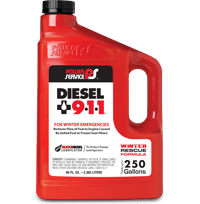
Iced-up fuel-filters or fuel lines are common in diesel engines when the temperature is very close to 32-degrees. Power Service has an emergency diesel-fuel solution called Diesel 911 and it’s a winter emergency use product specifically designed to get an iced or gelled-up diesel engine back running quickly.
Read MoreProtect Your Diesel Now, Before Winter’s Wrath Turns it Foul
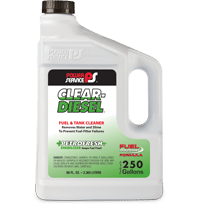
There is simply no way to keep water from contaminating your tank of diesel fuel. Clear-Diesel Fuel & Tank Cleaner polishes your diesel fuel, prevents cold-weather failures, and protects fuel quality over a long, cold winter. Here’s how.
Read MoreWinter Weather and Diesel Fuel: How to Avoid a Breakdown
Diesel fuel has unique properties that provide the power and performance you depend on in your vehicle. But there are crucial differences between it and gasoline that are important to understand in the depths of winter. If you went into a laboratory with instructions to create a liquid fuel capable of providing tremendous low-end torque, high horsepower and the ability to allow a heavy vehicle to cruise efficiently for long distances, you’d emerge with something very similar to diesel fuel swirling around in the lab beaker in your hand. Diesel fuel is a wonder of the modern age that delivers exceptional performance in heavy-duty vehicles – from long-haul Class 8 tractor-trailers to heavy-duty pickup trucks. But those unique properties that give diesel fuel such potency in your engine also come with some substantial differences from gasoline. And it’s important to understand these properties so that you can properly manage them to ensure a long, productive and dependable life for your diesel powertrain. Winter operability of diesel fuel is measured by three primary data points. Let’s go through each one to learn what they are, why they’re important, and what you need to do about each one to ensure proper […]
Read MoreDiesel 911: the number-one emergency-use product for diesels for decades
Proven – by the generations of diesel operators that swear by Diesel 911. Diesel drivers know how quickly things can turn bad when a fuel-filter plugs in cold weather. Fuel-filters plug in winter for two reasons: (1) ice and (2) wax.
Read MoreUse the Power Service 3-Step Winter Prep to outsmart winter!
The good news is that you can outsmart winter with our simple 3-Step Winter Prep Guide!
Read MoreDiesel Particulate Filters, Regens and the Combustion Process in Diesel Engines
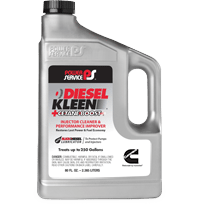
Advanced emissions systems on newer diesel engines often utilize diesel particulate filters (DPFs) that help trap harmful emissions from being released into the air. When these filters start to fill up, they must go through a regeneration (regen) process that converts the soot accumulated in the filter into ash using chemical reactions at high temperatures. Regens have plagued diesel operators with reduced power and performance throughout the past several years and, unfortunately, High Pressure Common Rail (HPCR) diesel engine technology takes most of the blame. There are multiple factors contributing to the combustion issues experienced by today’s diesel engines. Fortunately, the primary issues can be easily addressed — allowing the system to function properly and achieve maximum combustion — by using Diesel Kleen +Cetane Boost. 1. Injector Deposits – Modern injectors have tolerances of 1 to 3 microns, so microscopic deposits will lead to injector plugging and/or insufficient fuel atomization. 2. Low Cetane – Naturally occurring cetane lower than 50 does not allow for maximum combustion, leading to an increase of unburnt fuel in the combustion chamber. DIRTY INJECTORS lead to insufficient injection and poor atomization, resulting in reduced fuel combustion, power and performance. CLEAN INJECTORS lead to proper […]
Read MoreHow Treating Your Diesel Fuel with Diesel Kleen Will Save You Money at the Pump
Diesel fuel costs recently have soared to all-time highs. One way to reduce costs is with a quality diesel fuel additive like Diesel Kleen +Cetane Boost. Here’s why. Clean Dirty Fuel Injectors Over time, fuel injectors get clogged. When deposits form, the injector will stick and disrupt flow into the combustion chamber. If the injector sticks open, excess fuel can end up in the cylinder — resulting in increased emissions, decreased fuel economy and excessive power loss. If the injector sticks closed, the resulting insufficient amount of fuel leads to power loss and a rough-running engine. External deposits form on the injector tip to impede nozzle spray patterns and reduce combustion efficiency. Diesel Kleen +Cetane Boost cleans dirty injectors and prevents injector sticking in both High-Pressure Common Rail (HPCR) and older systems. Boost Cetane Levels Fuel economy suffers when fuel is not completely burned during the combustion process. Cetane is a high energy compound that improves overall combustion. The cetane number is a measure of the ignition quality of diesel fuel – the higher the cetane number, the shorter the ignition delay. Fuels with higher cetane numbers ignite more quickly and burn more completely, resulting in smoother running […]
Read MoreA Beginner’s Guide To Understanding Diesel Engines
By Mike McGlothlin It’s no secret that the majority of Americans are more accustomed to gasoline engines than diesels. Statistics gathered by R.L. Polk confirm this, as just 2.8 percent of all registered passenger vehicles (cars, SUV’s, pickup trucks, and vans) ran on number 2 diesel fuel in 2013. To be sure, most folks in the U.S. expect to find spark plugs or coil packs when they pop the hood, not turbochargers and injection pumps (two very key elements on nearly every diesel engine you’ll come across, hence the term “turbodiesel”). In order to gain an understanding of the differences between diesel and gasoline engines, we’ll begin with all of the similarities shared between the two. The type of fuel burned by either power plant doesn’t change anything in relation to the engine’s general makeup (i.e. a crankshaft spinning, connecting rods and pistons moving up and down, air being pumped in, and exhaust being routed out). In fact, the same basic architecture is very much the same. But what goes on in-cylinder in a diesel is vastly different from what you’ll find in its gas-powered counterparts. The easiest way to explain the difference between gasoline and diesel engines is with […]
Read MoreAbout Biodiesel and Biodiesel Blends
As pressure increases to lessen America’s dependence on fossil fuels, biodiesel will become more widely used as a blended component of diesel fuel. Some states have mandated that all diesel fuels contain varying percentages of biodiesel, and the U.S. government has authorized a B20 fuel (20% biodiesel and 80% diesel fuel) for use in non-strategic applications. Poor cold weather performance, high water content and microbial infestation will require biodiesel fuels to be treated for reliable performance. All Power Service diesel additives are effective in treating biodiesel and biodiesel blends and have directions for their use printed on the back of the containers.
Read MoreUltra Low Sulfur Diesel (ULSD) Fuel
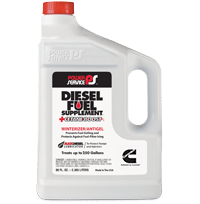
In 2006, the EPA mandated that refiners transition to nationwide delivery of Ultra Low Sulfur Diesel (ULSD) fuel. ULSD contains less than 15 ppm sulfur and allows emissions on 2007 and newer diesel engines to be the most environmentally friendly engines ever produced. While emissions are greatly reduced, ULSD ushers in newer operational challenges for the diesel engine operator. These challenges include accelerated wear rates on fuel injectors and pumps requiring the use of Slickdiesel® Lubricator technology. The poor cold temperature operability of ULSD demands the more robust antigel chemistry of Diesel Fuel Supplement® + Cetane Boost®. Fuel injectors will foul more quickly — a problem easily solved by Diesel Kleen® +Cetane Boost®— and instability caused by long-term storage will necessitate the use of Clear-Diesel® Fuel & Tank Cleaner.
Read More